
00 · Start here
Introduction to Costa Rica
A small country with outsized variety: two coasts, mountains, microclimates, a stable democracy and a culture built around “pura vida.” Understanding the basics helps everything else make sense.
In this chapter
Costa Rica abolished its army in 1948 and invests in education and health instead. It is politically stable, has a large middle class by regional standards, and welcomes visitors and residents — but it is not a cheap extension of North America. Costs, systems and pace are their own thing.
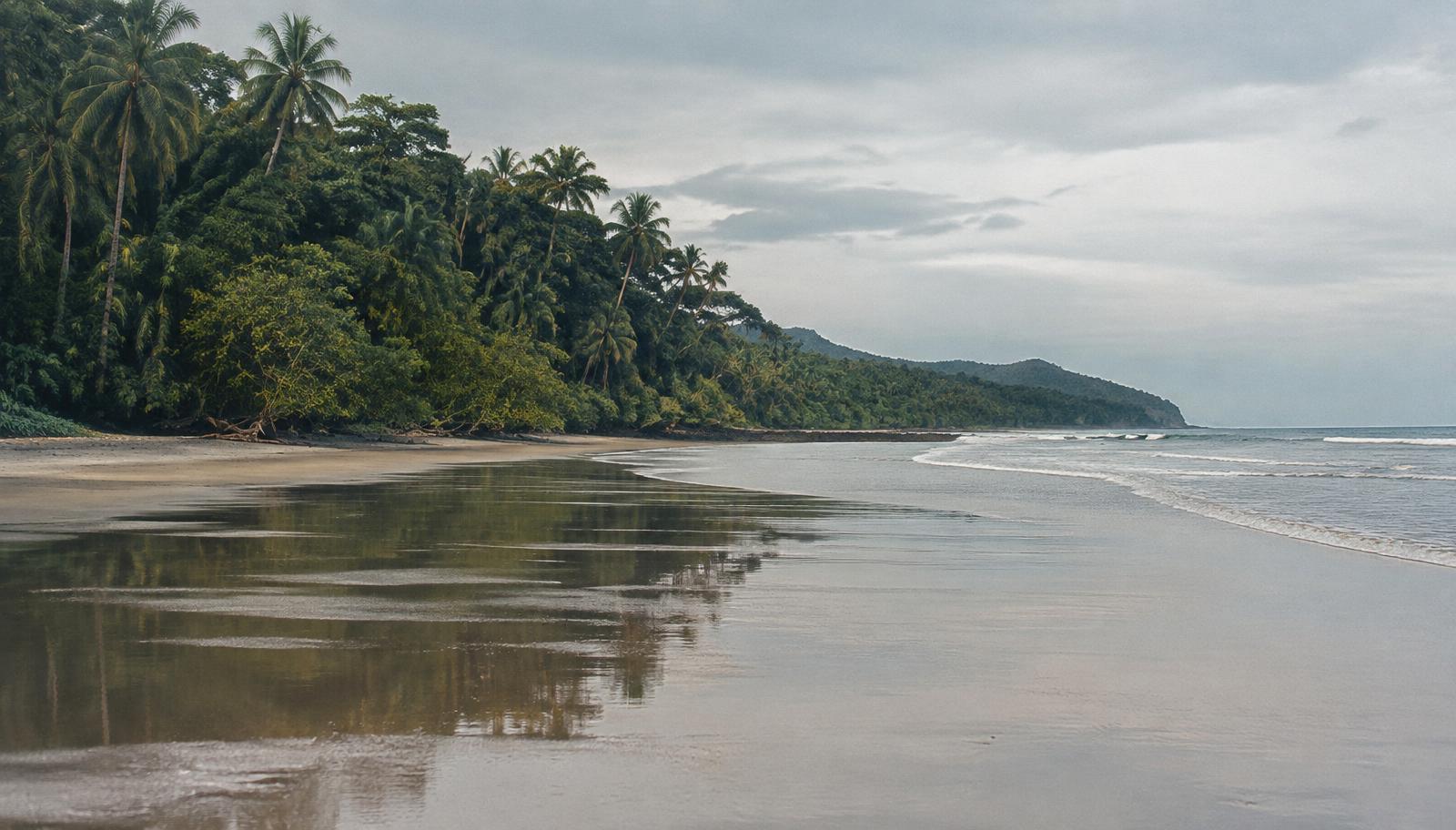
The country is divided into seven provinces; the Southern Zone of the Pacific coast — Dominical, Uvita, Ojochal and the surrounding hills — is where this guide concentrates. Distances are short on the map and long on the road: mountain routes, rain and river crossings make travel time the number that matters.
- Currency: the colón (₡); US dollars are widely accepted in tourist areas, but colones are needed for many local transactions.
- Language: Spanish. English is common in tourism, rare in government offices and local trades.
- Climate: tropical, with a dry season roughly December–April and a wet season May–November; the Southern Zone is greener and wetter than the north.
- Time: Central Standard Time year-round, no daylight saving.
My chapter checklist
0 of 4 complete
Southern Zone only · Signed-in readers can return to saved checklists and notes; guest entries are temporary. Current legal and technical requirements must be checked before acting. Personal contacts are not included in this open preview.